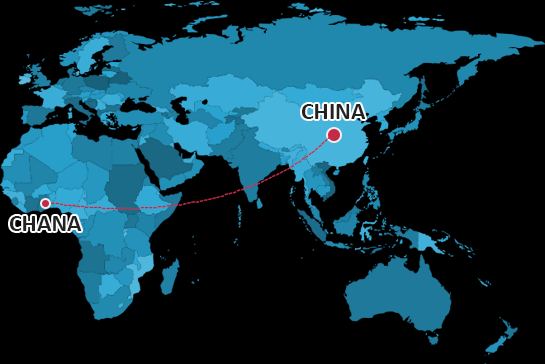
This Friday (January 9th), the U.S. Supreme Court will make a final ruling on the global tariff policies implemented during the Trump administration. This ruling is highly anticipated, especially given its profound impact on U.S.-China trade relations, and Chinese companies and related industries are closely watching.
If the tariffs are ruled illegal, US tariffs on China could be reduced by up to 20%, and companies can apply to the US Customs and Border Protection for refunds totaling hundreds of billions of dollars.

However, these tariff policies have been controversial since their inception. Both the US Court of International Trade and the Federal Circuit Court of Appeals ruled that the tariffs based on IEEPA “exceeded presidential authority” and violated the scope of congressional authorization. During oral arguments before the Supreme Court in November 2025, most justices also expressed skepticism about the government’s arguments.
According to market data predictions, the probability of Trump’s tariff policies being upheld is only 22%-30%, while the probability of them being completely overturned is as high as 70%-78%. Several research institutions also predict a high probability of the tariffs being overturned.
Currently, several US companies have already initiated legal action. Conservatively estimated, the total amount of refunds could exceed $100 billion. This will not only inject short-term cash flow into the US manufacturing and retail industries, but for Chinese exporters, some goods that were unsold or delayed in customs clearance in the US will be able to circulate again, and the speed of trade is expected to recover.
Although the Trump administration insists that its tariff policy is “justified,” Trump himself has rarely expressed concern on social media, stating that if the Supreme Court overturns the tariffs, it will “deal a heavy blow to American manufacturing.” This reflects that tariffs have become a political symbol ahead of the 2026 elections.
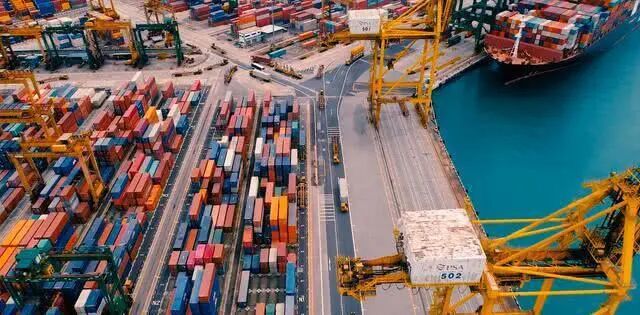
Government advisors have revealed that if the IEEPA measures fail, Trump may resort to Section 232 (national security tariffs) or Section 301 (unfair trade tariffs) to reimpose them. However, these mechanisms have long review periods, high evidentiary requirements, and limited scope. In the short term, the US will lose the administrative convenience of quickly imposing tariffs, and Chinese and American companies will have a brief strategic buffer period. Since the implementation of tariffs, inflationary pressure in the United States has remained high, with rising import prices driving up consumer spending. The government has been forced to announce temporary tariff exemptions for some key industries.
If the tariffs are overturned, the US CPI growth rate may significantly decline in the second quarter of 2026, and the trend of global supply chain “decoupling” will temporarily slow down. China’s export structure will also have room for recovery, cross-border e-commerce and manufacturing orders are expected to return, the RMB exchange rate may see a short-term rebound, and some Southeast Asian countries may face pressure from the short-term transfer of production capacity back to China.
Overall, the possibility of the US lowering tariffs on China is very high, and the final outcome depends on the Supreme Court’s ruling this Friday. Chinese companies and related industries need to closely monitor the ruling and prepare in advance to seize potential opportunities and promote their own development.
 English
 Arabic
 Chinese (Simplified)
 Dutch
Dutch French
 German
 Italian
 Portuguese
 Russian
 Spanish

 Suede leggings XL/BlueRemove 1 × $60.00 f
 Contrasting sheepskin... XL/BlueRemove 1 × $60.00
 Biker-style leggings XL/BlueRemove 1 × $60.00
 Contrasting sheepskin sweatshirt XL/BlueRemove 1 × $60.00